
In the competitive world of ecommerce, understanding how your potential customers search for products is crucial. One of the most effective ways to ensure that your online store attracts the right audience is through keyword research. But it’s not just about finding popular search terms. It’s about finding the right keywords that align with your products, audience, and business goals.
Keyword research for ecommerce can feel overwhelming, but it doesn’t have to be. With the right approach, it can be a game-changer in your digital marketing strategy, driving more organic traffic, improving rankings, and ultimately increasing sales. This guide will break down everything you need to know to excel in keyword research for your ecommerce business.
Why Keyword Research is Crucial for Ecommerce Stores
Before diving into tactics, let’s first understand why keyword research is such a powerful tool for ecommerce:
-
Boosts Organic Traffic: By targeting the right keywords, your ecommerce website becomes more visible on search engines, leading to more organic visits.
-
Aligns Content with Search Intent: Keyword research helps you match your content with what people are actually searching for. Whether it’s a specific product feature or category, understanding search intent is key.
-
Enhances User Experience: Knowing which terms your audience uses ensures you create product descriptions and landing pages that speak directly to them, leading to higher engagement and conversion rates.
-
Informs Your Product Strategy: Keywords often reveal gaps in your product offerings, which can guide inventory decisions and future product development.
Step-by-Step Guide to Keyword Research for Ecommerce
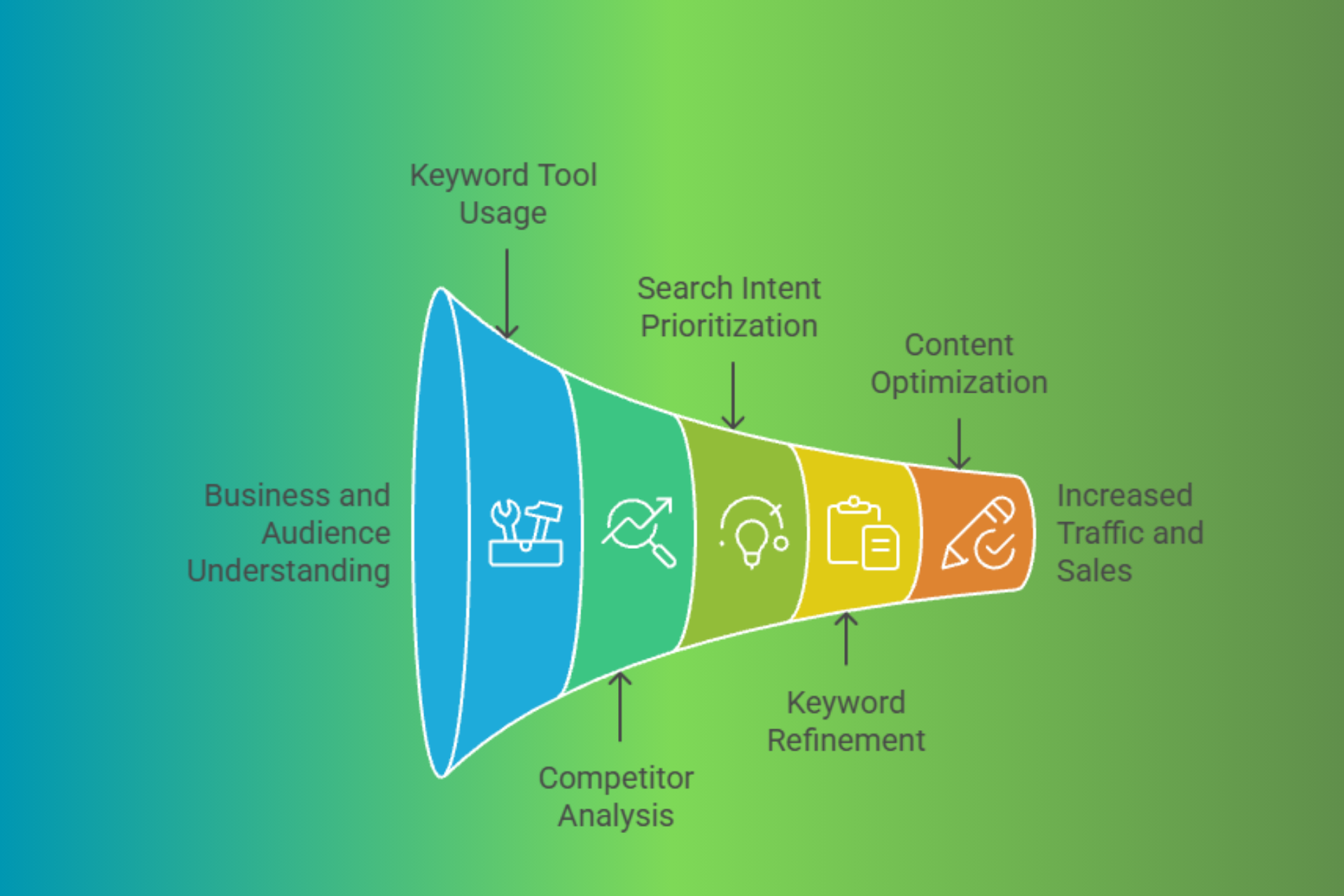
Now that we understand the importance, let’s break down the process of keyword research for ecommerce into easy-to-follow steps:
1. Understand Your Business and Target Audience
Before jumping into tools and keyword lists, take a moment to define your target audience. Consider these points:
-
Who are your ideal customers? Are they new to your niche, or are they seasoned buyers? This will affect the language and keywords they use.
-
What problems does your product solve? Understanding pain points can guide you to keywords that address customer needs directly.
-
Which keywords describe your products? Think about the main features, benefits, and categories of your products.
2. Leverage Keyword Research Tools
There are numerous tools available for effective keyword research. Here are a few tried-and-tested ones:
-
Google Keyword Planner: Free and ideal for finding search volume, competition level, and relevant keyword ideas.
-
SEMrush: Offers a deep dive into keyword trends, search volume, and competitive analysis.
-
Ahrefs: Known for providing excellent keyword difficulty scores and SERP analysis.
-
Ubersuggest: A beginner-friendly tool to find keyword ideas and see what your competitors are ranking for.
When using these tools, start by searching for your main product categories or core terms. Explore related keywords, and pay attention to long-tail keywords (phrases with 3+ words) since they often have lower competition and higher conversion potential.
3. Analyze Competitors’ Keywords
Once you have a list of keyword ideas, it’s time to take a look at what your competitors are doing. This will give you insights into which keywords they are targeting and how you can do it better.
-
Use SEMrush or Ahrefs to perform a competitor analysis. Type in your competitor’s URL and check which keywords they rank for.
-
Find Keyword Gaps: Look for keywords your competitors are missing. These gaps represent opportunities where you can rank easily.
-
Evaluate Search Intent: Make sure you’re targeting the same search intent. For example, if your competitor ranks for “best running shoes,” but your ecommerce store specializes in “affordable running shoes for beginners,” you can target this gap.
4. Prioritize Keywords Based on Search Intent
Understanding search intent is crucial when selecting your ecommerce keywords. There are four main types of search intent:
-
Informational: The user wants to learn more about a topic (e.g., “What are the best running shoes for men?”).
-
Navigational: The user is looking for a specific website (e.g., “Nike official store”).
-
Transactional: The user is ready to make a purchase (e.g., “Buy running shoes online”).
-
Commercial Investigation: The user is comparing options before making a purchase (e.g., “Best running shoes under $100”).
For ecommerce, transactional and commercial investigation keywords are typically the most valuable because they signal purchase intent.
5. Refine Keyword List and Group Them
Once you’ve compiled a list of keywords, it’s time to refine and organize them. Here’s how:
-
Search Volume vs. Competition: High search volume keywords are attractive, but they may come with high competition. Try to balance these with low-competition keywords that still have decent search volume.
-
Long-Tail Keywords: These are often more specific and less competitive. They may drive less traffic, but the traffic you do get is more likely to convert into sales.
-
Group by Relevance: Group similar keywords together by themes, product categories, or customer pain points. This will help you create targeted content later.
6. Optimize Your Product Pages and Content
Once you have your target keywords, you need to optimize your product pages, categories, and blog content around them.
-
Product Titles & Descriptions: Include your main keywords naturally in product titles and descriptions. Avoid keyword stuffing, as this can negatively impact user experience and rankings.
-
Use Semantic Keywords: Search engines like Google are smart enough to understand synonyms and related terms. Use semantically related keywords (e.g., “running shoes” could also include “sneakers” or “athletic footwear”).
-
URL Structure: Ensure your URLs are concise and include target keywords. For example:
www.yourstore.com/mens-running-shoes. -
Product Images: Use descriptive filenames and alt text that incorporate relevant keywords. This can help your images appear in image search results.
-
User Reviews & Ratings: These can enhance content relevance and keyword diversity. Encourage customers to leave reviews that include keywords naturally.
7. Track, Measure, and Adjust
Keyword research is an ongoing process. Track your keyword performance using Google Analytics, Google Search Console, or tools like SEMrush and Ahrefs. Regularly check:
-
Keyword Rankings: Are you ranking higher for your target keywords?
-
Organic Traffic: Is your site seeing more visitors from search engines?
-
Conversion Rate: Are the visitors coming to your site converting into buyers?
Adjust your strategy based on performance data. If certain keywords aren’t bringing in the results you expected, don’t be afraid to tweak your approach.
Common Mistakes to Avoid in Ecommerce Keyword Research
While keyword research may seem simple, there are some common pitfalls that ecommerce businesses fall into. Be mindful of the following:
-
Ignoring Long-Tail Keywords: These low-competition keywords can drive high-converting traffic. Don’t overlook them for high-volume, competitive terms.
-
Neglecting Local SEO: If you’re a local business or have physical stores, make sure to target geo-specific keywords (e.g., “best running shoes in New York”).
-
Overlooking User Experience: Keyword optimization should never compromise the user experience. Avoid keyword stuffing, and ensure your content remains informative and readable.
-
Not Analyzing Search Intent: Without analyzing search intent, you may attract the wrong audience, leading to higher bounce rates and lower conversions.
Effective keyword research for ecommerce is about more than just picking the most popular search terms. It’s about aligning your business objectives with your audience’s needs, understanding search intent, and optimizing your site for conversions. By following the steps outlined in this guide and using the right tools, you’ll be well on your way to boosting your ecommerce store’s visibility and sales.
Remember, keyword research is a continuous process. Stay updated with new trends, test new keywords, and refine your strategy regularly. With a thoughtful approach, you’ll not only rank higher but also attract the right customers who are ready to make a purchase.
