
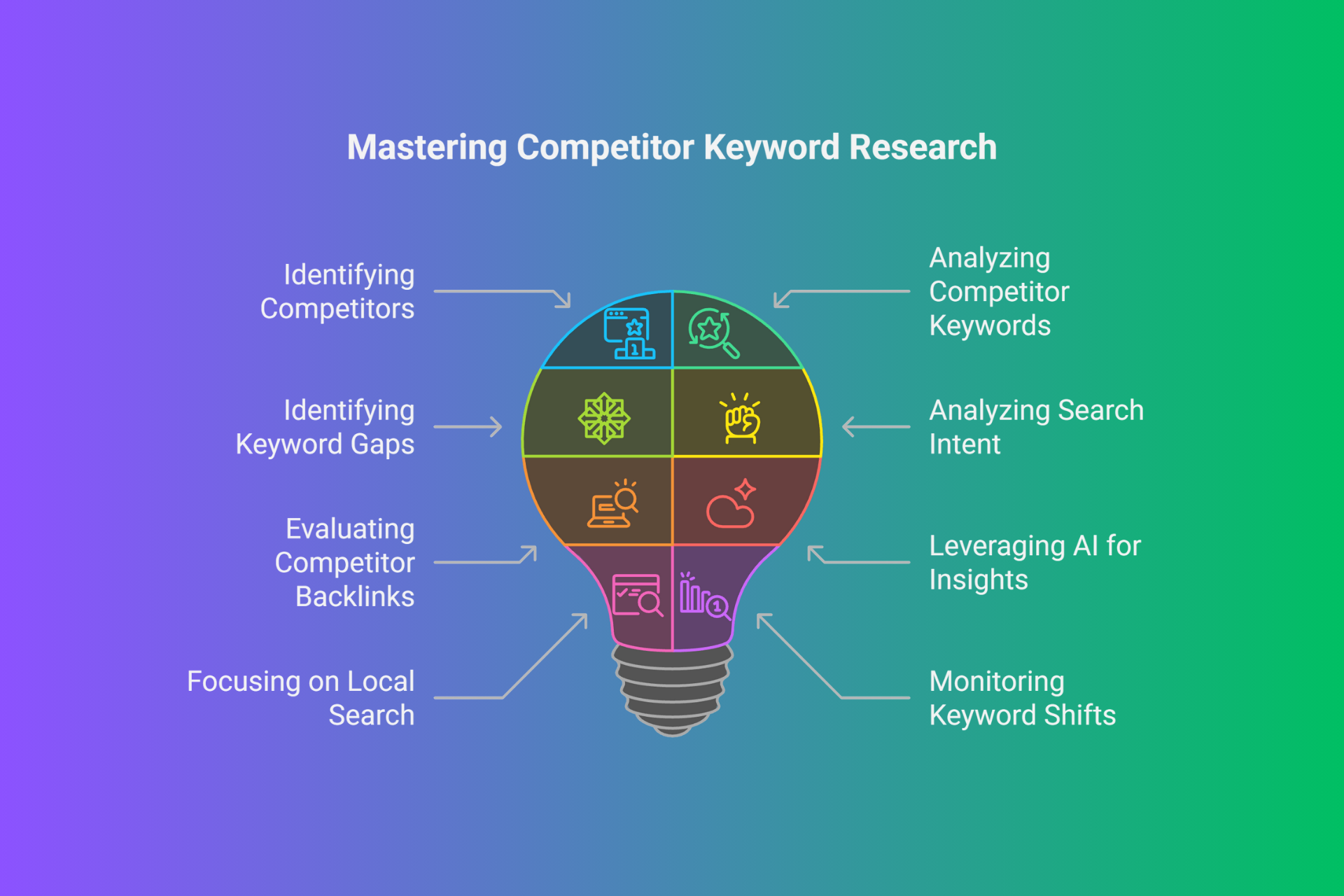
Competitor keyword research is one of the most powerful SEO strategies you can implement. By understanding what keywords your competitors are ranking for, you can uncover opportunities, improve your own rankings, and stay ahead of the curve in 2026 and beyond.
In this guide, we’ll break down everything you need to know about competitor keyword research—tools, strategies, and real-time examples—to help you craft a killer SEO strategy that outranks your competition.
What is Competitor Keyword Research?
Competitor keyword research is the process of analyzing the keywords your competitors rank for and identifying opportunities you can leverage. It’s about understanding their SEO strategy to find gaps in your own, enabling you to target high-value, high-conversion keywords.
Benefit of Competitor Keyword Research Important?
- Uncover New Opportunities: Discover untapped keywords your competitors are ranking for.
- Improve Content Strategy: Find keyword gaps and optimize your content to fill those gaps.
- Stay Ahead of Trends: Spot new trends by analyzing your competitors’ evolving strategies.
- Boost Organic Traffic: Target keywords that drive high-intent traffic, improving rankings.
Steps for Performing Competitor Keyword Research
Competitor keyword research isn’t complicated, but it requires a strategic approach. Follow these steps to ensure you are on the right track.
Step 1: Identify Your Top Competitors
Before you can analyze keywords, you need to identify your top competitors.
How to Identify Competitors:
- Search for your target keywords: Look at who ranks for the keywords you’re targeting.
- Use SEO tools: Tools like SEMrush, Ahrefs, and SpyFu can help you identify competitors by entering your domain or a target keyword.
Step 2: Analyze Competitor Keywords Using SEO Tools
Now that you’ve identified your competitors, it’s time to dig deep into their keyword strategy. Use SEO tools to gather data on which keywords they’re ranking for.
Top SEO Tools to Use:
- SEMrush: Provides detailed competitor analysis, showing keywords competitors rank for and how difficult those keywords are.
- Ahrefs: Great for competitive keyword analysis and discovering new keyword opportunities.
- Moz: Useful for checking domain authority and discovering keywords competitors rank for.
Example: If your competitor ranks for “best eco-friendly products,” SEMrush will show you a list of keywords driving traffic to their pages, along with volume and competition levels.
Step 3: Identify Keyword Gaps
A keyword gap is a keyword your competitor ranks for, but you don’t. This is an opportunity for you to improve your content and SEO strategy.
How to Identify Keyword Gaps:
- Use SEMrush’s Keyword Gap Tool to compare your keyword strategy against competitors.
- Check Ahrefs’ Content Gap Tool to find opportunities your competitors are capitalizing on.
- Look for low-competition, high-volume keywords that your competitors rank for but you’re missing out on.
Step 4: Analyze Search Intent and Content Quality
Search intent is a key factor in determining which keywords to target. Understand whether the searcher is looking to buy, learn, or compare.
Search Intent Types:
- Transactional: Keywords like “buy eco-friendly products” indicate the user is ready to make a purchase.
- Informational: Keywords like “what are eco-friendly products?” show users are looking for information.
- Navigational: Users search for specific brands or websites, like “best eco-friendly brands.”
How to Improve Content:
- Analyze the content your competitors rank for. Do they answer user intent effectively?
- Create more comprehensive, higher-quality content that better answers the searcher’s query.
- For example, if your competitor ranks for a term like “best eco-friendly products,” you can write a more detailed blog post that includes buyer guides, reviews, and comparison charts.
Step 5: Evaluate Competitor Backlinks
Backlinks are a significant factor in keyword rankings. By analyzing the backlinks of top-ranking competitors, you can identify high-quality backlink opportunities to replicate.
Tools to Analyze Backlinks:
- Ahrefs: Provides detailed backlink data and allows you to see which websites are linking to your competitors.
- Majestic: Offers metrics like Trust Flow and Citation Flow to help identify high-quality backlinks.
- SEMrush: Provides a comprehensive backlink audit and helps you track competitors’ backlinks.
Actionable Tips:
-
Look at the top backlinks your competitors have and see if you can get similar links.
-
Focus on authoritative domains in your niche to build backlinks that improve keyword rankings.
Advanced Competitor Keyword Research Strategies for 2026
SEO in 2026 is more sophisticated than ever before. Let’s dive into some advanced strategies to take your competitor keyword research to the next level.
Strategy 1: Leverage AI and LLM for Keyword Insights
AI-driven tools like GPT-4 and other Language Learning Models (LLM) can help you analyze competitor keywords, generate new keyword ideas, and understand deeper semantic relationships between words.
How to Use AI in Keyword Research:
- Use GPT-4 for content generation and long-tail keyword research.
- Leverage AI tools to understand semantic meaning and related keyword suggestions.
- Tools like Frase or Clearscope can help optimize content based on competitor keywords and semantic relevance.
Strategy 2: Focus on Local Search Keywords
In 2026, local search will continue to be a crucial part of SEO. Make sure you’re targeting competitor keywords relevant to your geographical location.
Tools for Local Keyword Research:
- Google Keyword Planner: Get insights on local keyword performance.
- Moz Local: Helps optimize your website for local searches.
- BrightLocal: A powerful tool for tracking local competitors and their keyword strategies.
Example: If your competitor ranks for “eco-friendly products near me,” ensure your business is listed in local directories and optimized for local search terms.
Strategy 3: Monitor Competitor Keyword Shifts
SEO is always evolving, and so are your competitors. Keep an eye on how your competitors’ keyword rankings shift over time and adjust your strategy accordingly.
Tools for Tracking Shifts:
- Google Search Console: Track your keywords and those of your competitors.
- SEMrush: Use the Keyword Tracking tool to monitor changes in competitor keyword rankings.
- Ahrefs: Track keyword ranking progress for both your site and competitors.
Actionable Tip: Set up alerts for competitors’ keywords and monitor their ranking shifts. This can give you a heads-up when they target new keywords, and allow you to capitalize on any gaps.
Real-Time Example: Competitor Keyword Research in Action
Let’s say you’re running an eco-friendly product business and one of your competitors is ranking well for “best eco-friendly products.”
Here’s how to apply the steps above:
- Identify Competitors: Use SEMrush to find competitors who rank for this keyword.
- Analyze Keywords: Use Ahrefs to analyze their keyword strategy and look for gaps.
- Fill Gaps: Target long-tail keywords like “best eco-friendly products for home” that your competitor isn’t focusing on.
- Improve Content: Create a more in-depth guide on eco-friendly products, including product reviews, comparisons, and user experiences.
- Backlink Strategy: Identify high-authority eco-friendly websites linking to competitors and try to secure similar backlinks.
Competitor keyword research is a vital part of any SEO strategy. By following the steps outlined in this guide—using the right tools, analyzing competitor content, and identifying keyword gaps—you’ll be well on your way to outranking your competition in 2026.
Remember, SEO is an ongoing process. Regularly monitor competitor shifts, leverage AI insights, and focus on both local and semantic keywords to stay ahead in the ever-evolving SEO landscape.
With a well-researched, competitor-focused strategy, you’ll drive more organic traffic and improve your rankings in no time.
